CHEM 163 MIDTERM
February 10, 1998
Dr. John C. Vederas
I. Structure and Nomenclature - 47 Points
A. Draw structures for which names are given, or name the given
structures by any correct (systematic or common) nomenclature. Be sure to
give cis or trans (or if appropriate Z or E) or R or S assignment to the
isomer where indicated by asterisks (***). (2 points each - 20 points
total)
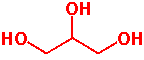
1. glycerol (lubricant, also present in human cells)
2. pyridine (common solvent

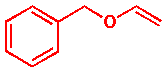
3. benzyl vinyl ether
4. allyl alcohol

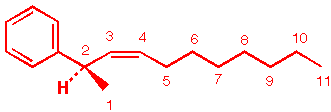
5. (R)-cis-2-phenyl-3-undecene (use part structure below in your
drawing to assist grading)
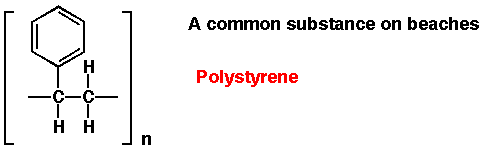
6.
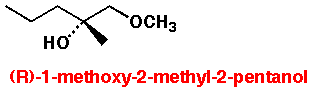
7.
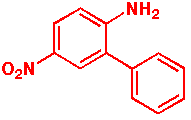
8. 2-phenyl-4-nitroaniline
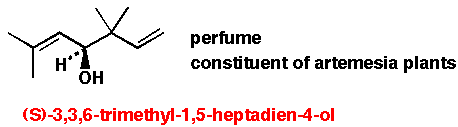
9.
10. sperm attractant for coral polyps

2,4-tetradecadiyne-1-ol
B. Determine whether the following pairs of structures are identical
(i.e. different pictures of the same molecule), structural isomers, diastereomers,
or enantiomers. (2 points each - 8 pts total).
1.
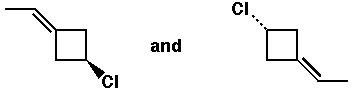 enantiomers
2.
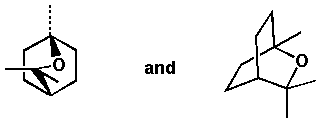 identical
3.
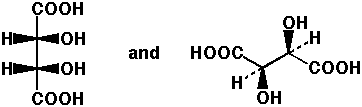 diastereomers
4.
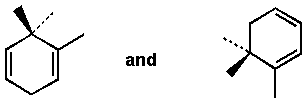 structural isomers
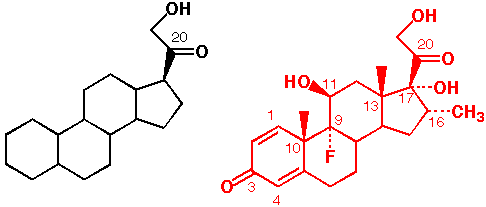
C. 1. Dexamethasone is a synthetic drug which mimics the
anti-inflammatory properties of adrenocorticoid hormones such as cortisone
in treatment of rheumatoid arthritis, and has also been used for treatment
of depression. It does have serious side effects, such as excessive appetite
and water retention. Its complete chemical name is 9-a-fluoro-16a-methyl-11b,17a,21-trihydroxypregna-1,4-diene-3,20-dione.
Complete its structure using the partial drawing given below. Be sure to
provide correct stereochemistry (do not forget the b-methyl group(s) which
are part of the basic skeleton). (9 points total)
2. Answer the following questions by giving the correct numbers
(1 point each): (3 pts total)
a. The number of carbons in the dexamethasone molecule is:
22
b. The number of stereogenic (i.e. chiral) centres in dexamethasone
is: 8
(carbons 8,9,10,11,13,14,16,17)
c. The number of hydrogens in the dexamethasone is: 29
3. Indicate whether the following statements are true (T)
or false (F). No penalty for guessing. (1 pt each - 6 pts total)
a. Changing all but one of the stereocenters in dexamethasone
to the opposite stereochemistry will generate a diastereomer True
b.Changing the 17alpha hydroxy group in dexamethasone to b (beta)
will generate an enantiomer. False
c. Dexamethasone has the same number of carbons as the pregnancy
hormone, progesterone. False
d. A human produces about 1 gram of male or female sex hormone
per day. False
e. Cholesterol is obtained only in the diet by humans. False
f. The difference between androgen and estrogen skeletons is
one methyl group. True
II. Physical Properties and Reactivity - 13 Points
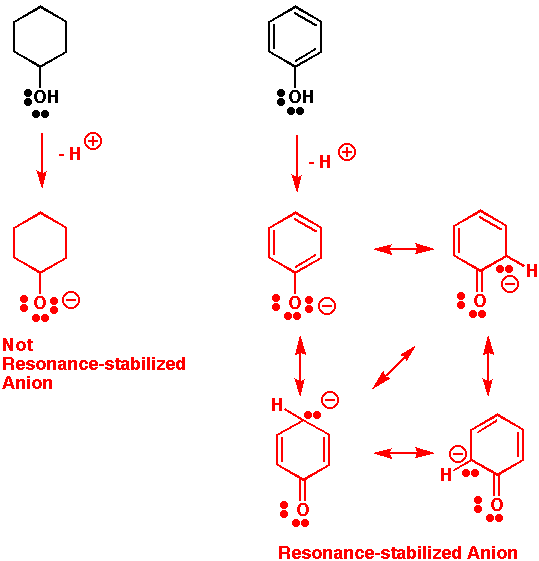
A. Use twenty words or less and at least three resonance structures
to explain why phenol is much more acidic than cyclohexanol (by a factor
of ca 107 ) ( 4 pts)
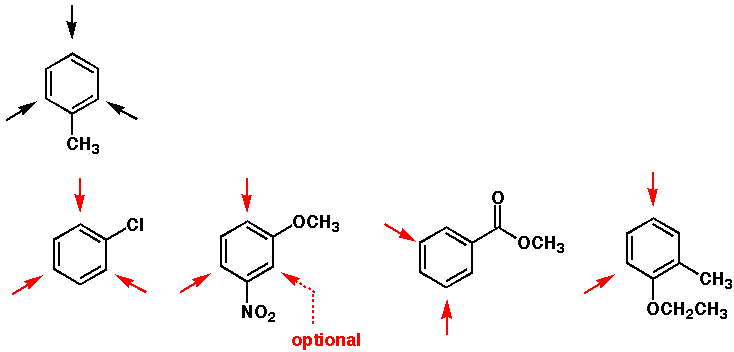
B. In the group below use an arrow to indicate the position(s)
on the aromatic ring which would be most likely to be attacked by chlorine
in the presence of FeCl3. (4 pts - 1 pt each)
Example:
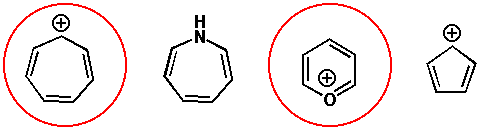
C. In the group below Circle all aromatic compounds or ions. (4
pts)
III. Definitions and Applications - 9 Points
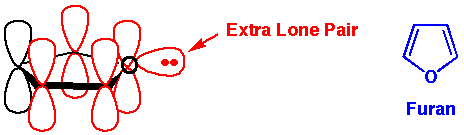
A. Furan is a heterocyclic aromatic compound that occurs in oils
obtained by distillation of pine resin. Its molecular formula is C4H4O.
In the part structure below draw the p atomic orbitals involved in forming
the aromatic system in correct geometry. One has been drawn for you already.
Also indicate the geometry of any orbital(s) having a lone (unshared) pair
of electrons that are not part of the aromatic system. If there are none
that fit this description, write "No additional lone pairs"
(3 points)
B. The three compounds shown below were discussed in class. Identify
them by common name and briefly (10 words or less) describe their importance
or use. (6 pts total - 2 pt each)
1.
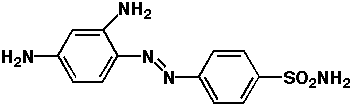
Prontosil - the first Sulfa Drug precursor -
Antibiotic discovered by Gerhard Domagk
2.
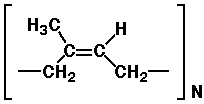
Rubber or Polyisoprene (cis) - used in tires
etc
3.
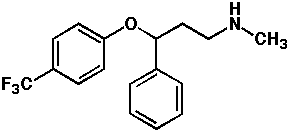
Prozac or Fluoxetine - Most widely used Antidepressant
- Serotonin Uptake Inhibitor
IV. Reactions - 16 Points
A. Show the structure of the major organic product of each of
the following reactions. Show stereochemistry where indicated by asterisks
(***). (2 points each - 8 points total)
1.

assigned problem 25.32
2.
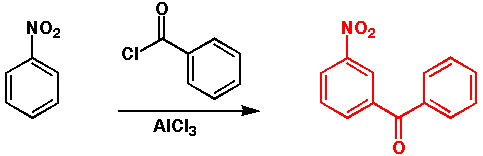
3.
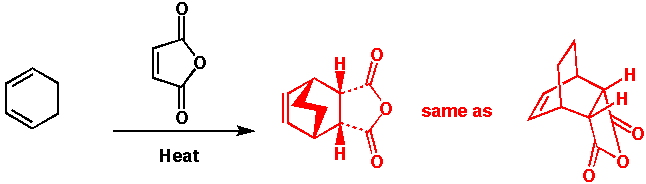
4.
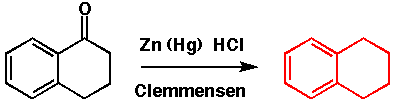
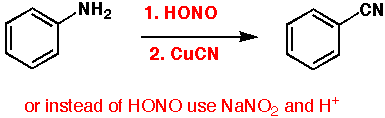
B. Show reagents that will do the required transformations. In
some cases two or three steps may be necessary. (2 pts each - 8 pts total)
1.

2.
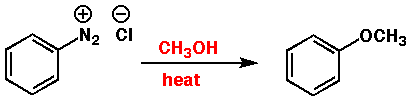
3.

4.
V. Synthesis and Mechanism - 13 Points
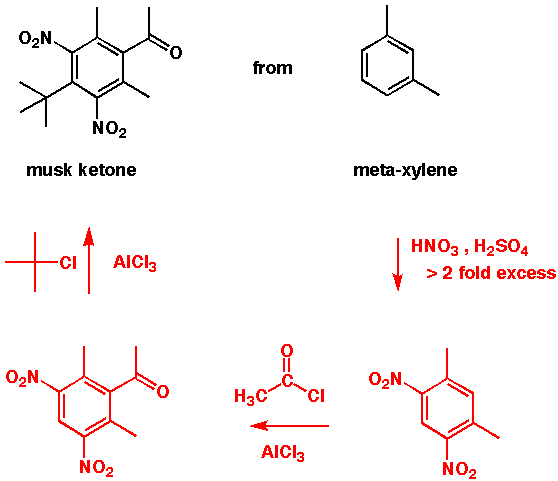
A. Musk ketone is a synthetic compound widely used in perfumes.
Outline a short synthesis of the compound from meta-xylene (dimethylbenzene)
and any other necessary organic or inorganic reagents. (4 points)
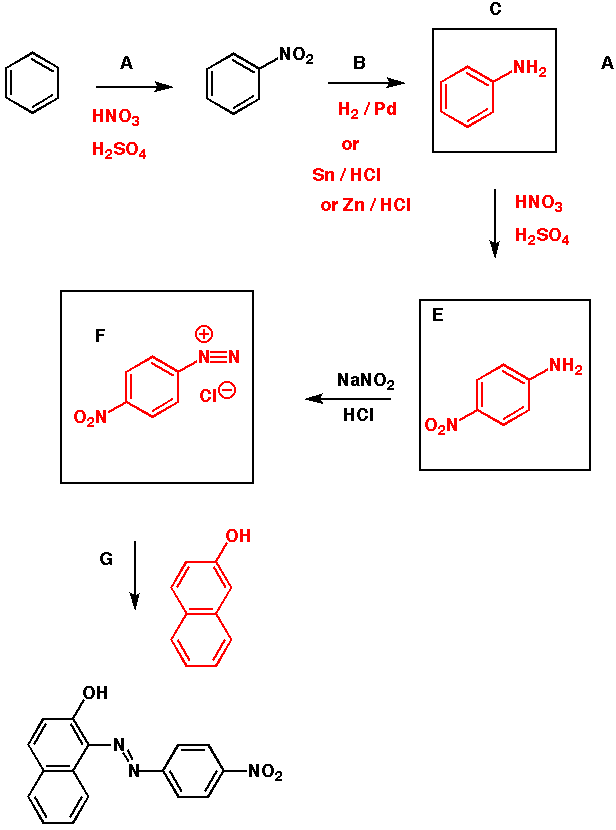
B. The dye Para Red can be synthesized from benzene and another
organic compound G in several steps as outlined below. The steps
are shown, but are missing the necessary reagents and interemediates. Provide
the missing reagents and intermediates to show how to complete the synthesis
of Para Red. (7 points)
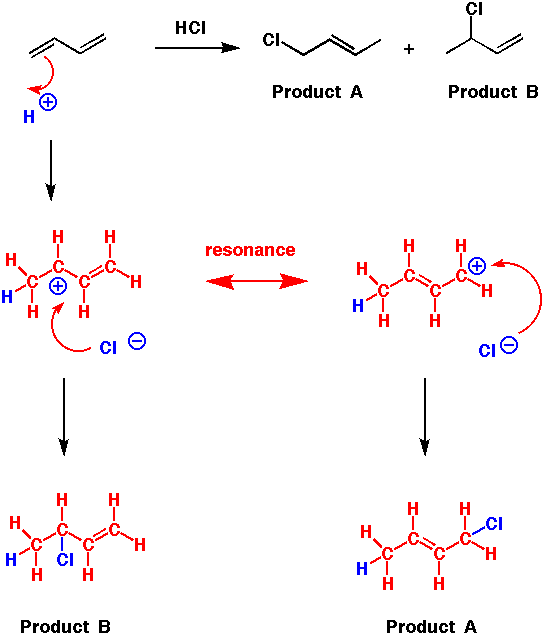
C. Provide a detailed "step by step" mechanism for the
reaction shown below. Be sure to show the stuctures of key intermediates
and indicate the movement of electrons using the curved arrow convention.
Use resonance theory to explain why two products are produced. (6 points)